We are each other’s harvest, We are each other’s business, We are each other’s magnitude and bond. — Gwendolyn Brooks
Several years ago, Gwendolyn Brooks’ words above hit me like a brick and invited me to reconsider how I approach and respond to troubling leadership situations. Brooks—the first African American to receive a Pulitzer Prize and a poet deeply committed to community and social justice—helped me understand something critically important. At every turn, RELATIONSHIPS MATTER.
Relationships matter as we make our way through the mundane.
Relationships matter as we make our way toward life’s milestones.
Relationships matter as we make our way through catastrophes.
Relationships matter as we make our way toward solutions to life’s problems.
Relationships matter because whether we are talking about friendships, romantic relationships, business partnerships, or brief encounters with strangers, we cannot flourish alone. We are fundamentally shaped by and dependent upon one another, regardless of whether we consider ourselves close or distant, friends or enemies.
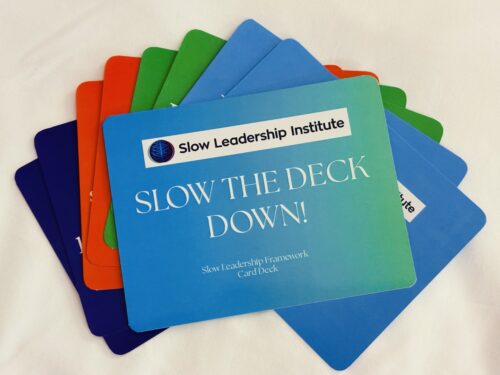
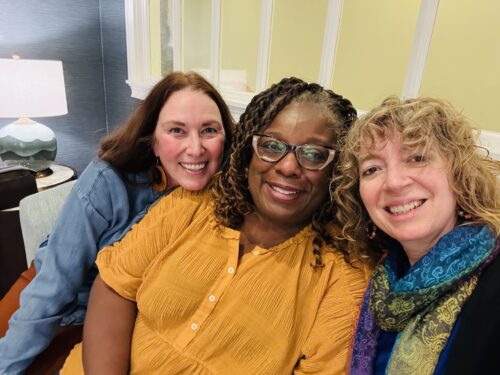
Last week, at the OSCLG Conference in Memphis, Sheryl, Rachel, and I focused on the notion that “we are each other’s” when we debuted our beta deck of Slow Leadership cards in a workshop we named “Slow the Deck Down.” Alongside our session participants, we worked through challenging leadership scenarios using the prompts to practice intention, other-centeredness, and self-grounding.
The grad students, administrators, and professors in the room reported afterward that the prompts helped them understand new ways to foster relationships with their family members, with those they lead, AND with themselves. They left with the hope of finding ways to make more space for prioritizing people in the midst of complex and sometimes problematic leadership processes.
Afterward, we found ourselves energized by our participants’ questions, ideas, and stories. And we kept returning to Brooks’ words: we are each other’s harvest, we are each other’s business, we are each other’s magnitude and bond.
When we rush toward solutions at all costs, we often neglect and miss what can emerge in the midst of genuine connection—the wisdom, the perspective shifts, the breakthroughs that can come from slowing things down.
As we continue developing the “Slow the Deck Down” card deck, we are carrying forward the energy from OSCLG and Brooks’ reminder that we are not isolated problem-solvers, but interconnected beings whose magnitude and bond create possibilities none of us could have generated or imagined alone.
What harvest might you discover if you slowed down your leadership and leaned into relationships today?